Posts Tagged MPC
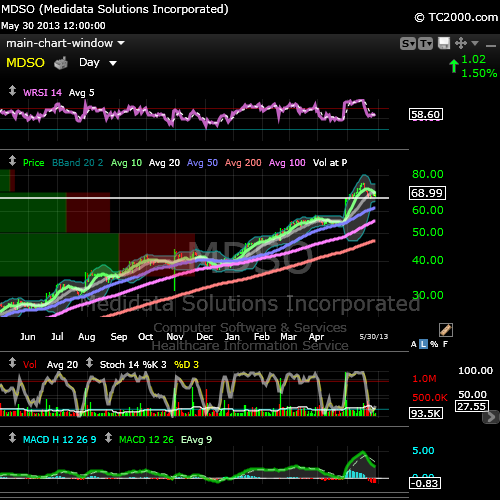
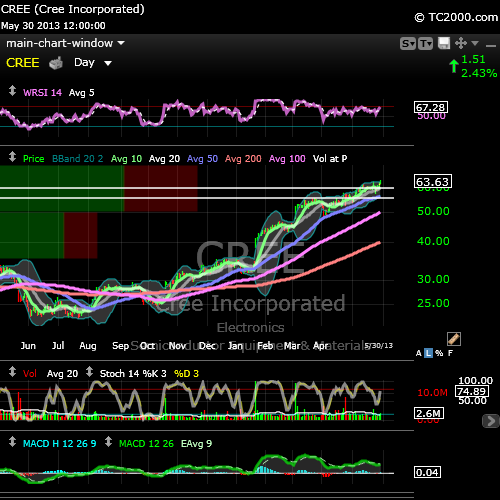
stubbystock portfolio review [EOD20130530] $MDSO $CPA $FLT $GILD $CREE top list by IBD rank
Posted by stubbybrown in Portfolio on 2013/05/30
symbols in alphabetical order: BBSI, BOFI, COG, COST, CPA, CREE, CSGP, DPZ, FLT, GILD, MDSO, MPC, SHOS, TYL ,UHS, UNF, VAL, WAB, WDC, WDR
finviz charts: in alphabetical order
stubbyrank criteria using IBD SmartSelect data:
- IBD composite rating: 80 or up
- IBD rs rating: 80 or up
- IBD eps rating: 70 or up
- equities are sorted in excel by 1, 2, 3 from above in that order. shifts ranking toward momentum rather than fundamental selection.
- typically i like to hold stocks with <5% float short. BOFI CREE DPZ are <10%.
stubbyallocation rules for constructing a diversified portfolio: (brief summary)
- i pick a benchmark that fits my thesis for at least a quarter going forward. then i use stubbyselect screens to look for additions to balance the portfolio as close as reasonably possible to the benchmark. currently, i am allocated to small/mid cap growth. the allocation is a close mix between ishares russell 2000 growth index etf IWO & ishares midcap growth index etf IWP.
- in addition to stubbyselect screening, i target long setups whose prices are reasonably close to each other and buy positions of shares in fractions based on a target total capital outlay. if i target $20K – $24K, positions may start in 1/4 or 1/8 positions. when i buy a long position, the cost of buying and selling the position ought not be more than 1/4 to 1/2% of that positions cost. i can achieve this using Interactive Brokers as my stock broker.
- to start with i equally share weight all purchases. years of backtesting have demonstrated my portfolios generally outperforms the benchmark by a handy margin over the course of several ups & downs over a year period of time. as the market moves, i’ll add or subtract positions based on technical buy or sell indicators. sometimes this results in being out of balance with my benchmark for some short periods of time.
- positions will be sold when they approach 1-3% loss when market technicals are very shaky. during strong uptrend markets i might let losses approach 5-8% if the stock is a leader and i feel there’s a good change of technicals turning in favor of the stock. positions with gains in the 15-30% range will be reduced or sold entirely.
- i take great advantage of worden tc2000 (the same people who produce freestockcharts.com) as my TA app and i set alarms based on price, volume and a whole host of technical indicators like cross ups or cross down in MACD, RSI, STOCHASTICS, CCI etc. worden does not integrate with my broker but i can manually setup automatic stop/loss trades based on my TA in tc2000 if i wish. i’m not a day trader which allows me more flexibility. for example, every now and then you may hear about mini or micro stock market crashes. prices suddenly drop 10% or more and then recover in 5 – 10 mins. an automatic stop/loss could lose a trader lots of money. this is a good segway to my next rule.
- i always keep large amounts of cash handy. i occasionally buy bond etfs and only under certain circumstances will i purchase inverse, levered inverse etfs or volatility tracking etfs. however i have lots of experience with inverse levered etfs and understand their weaknesses and advantages. prior to the 2008-2009 market collapse i developed a delta neutral arbitrage algorithm based on long/short etfs for a particular index which resulted in producing an oscillator to measure bullish or bearish market trends. i found the algo to be no more reliable than conventional oscillators as market conditions substantially improved. i do not trade options.
- i will bend these rules only when i think there is a high probability of obtaining exceptional short-term gains or to maneuver away from outsized losses.
in another post i’ll talk about my info gathering routines to look for catalysts for stock i hold or am watching, news to stay on top of market sentiment and i follow the domestic & global bond market like a hawk, currency indexes, precious metals futures and commodities sometimes. these can be proxy indicators for future supply and demand effecting the economy and the consumer in particular. another topic i will is how i use analytics in the morningstar.com personal portfolio manager and sites i rely on during earnings season.
current asset allocation: provided by morningstar.com personal portfolio manager.

worden charts of top 5:


Meet Stubby
my name is michael james. my aim is to articulate my wall street trading thesis and methodology as an individual trader. all trading i do is in my own SEP-IRA account. all content i post is for information & opinion purposes only and not intended to be investment advice.
STUBBY RSS FEED

 Stubby Brown's WS Finance